Let me be straight with you — because nobody else seems to want to b. The line between a licensed therapist and a life coach has gotten so blurry that people are getting hurt. And I'm done staying quiet about it.
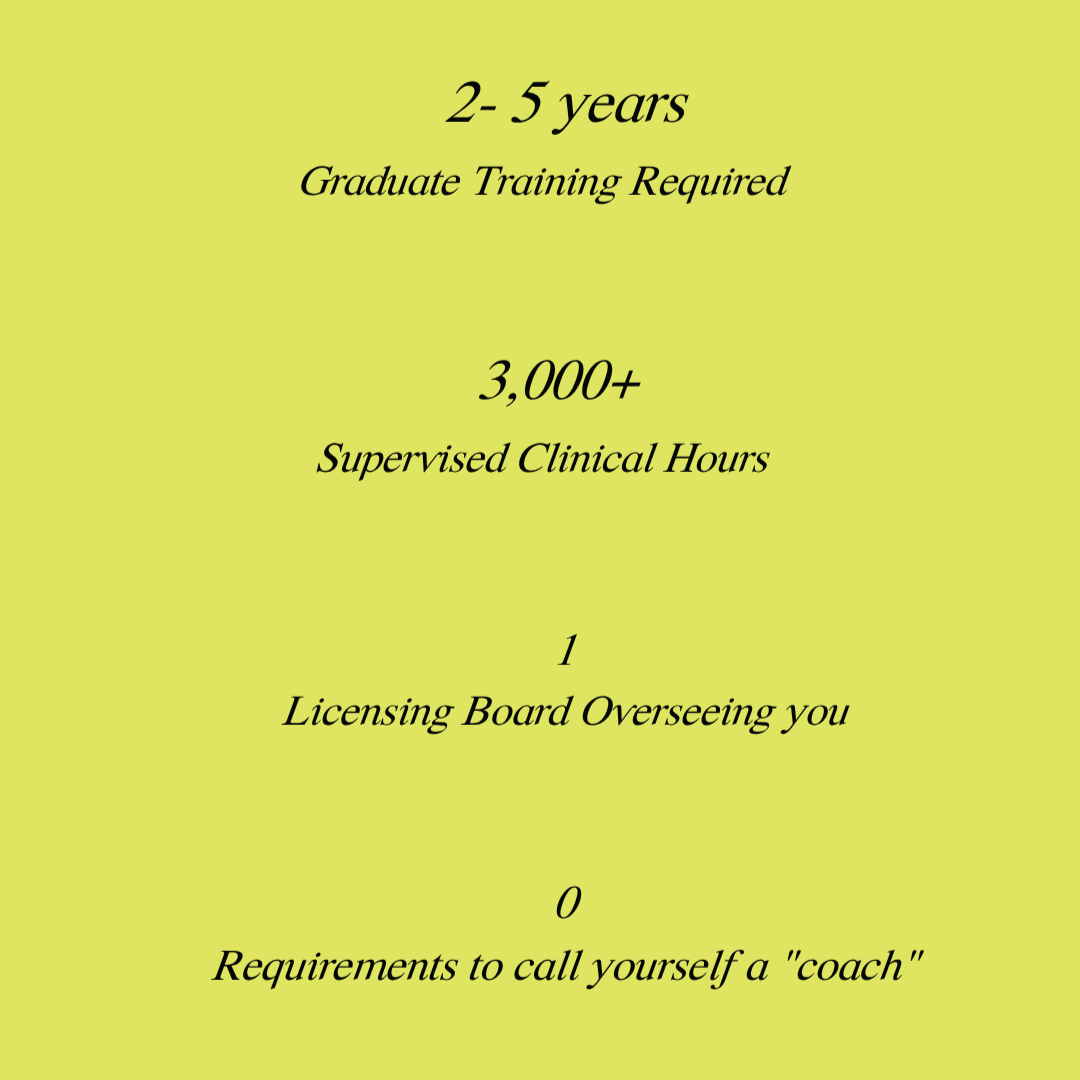
Somewhere along the way, "coach" became a magic word. Slap it on a website, record a few Instagram videos, charge $300 a session, and suddenly you're in the mental health space. No degree. No hours logged. No board watching over you. Just a title and a payment link. And the people who are hurting — who are showing up vulnerable and desperate for real help — sometimes have no idea what they're actually walking into
This isn't about judging coaches across the board. Some of them do wonderful work in the right lanes. But the wellness industry has a serious honesty problem, and it's time we talked about it like Adults.
Let's Talk About What It Actually Takes
To become a licensed therapist, I didn't just wake up one day and decide I was good at listening. I earned a graduate degree — a master's — in a mental health field. That's two to five years of rigorous academic training before I ever sat alone with a client. Then came thousands of supervised clinical hours, meaning an experienced, licensed professional watched my work (shout out to Dr. Bob), challenged my thinking, and signed off on my growth before I could practice independently. After all of that, I sat for a licensing exam that tested my clinical knowledge, ethics, and legal understanding. Then — and only then — did a state licensing board say yes, this person is qualified.
And that board? It doesn't disappear after I get licensed. It's watching. Every cycle, I complete continuing education every year including ethics and laws to stay current. If I harm a client, violate ethics, or practice outside my scope — that board can suspend or revoke my license. I can lose everything. That accountability isn't a burden. It's the point. It's what makes the work trustworthy.